
24 hr
Condoriri Mountain & Austria Peak Trek
Summit a 5,350-meter Andean peak on this challenging full-day alpine expedition from La Paz.
Reserve
Hand-picked by our editors — only the best 5 high-altitude treks from 19 reviewed.
Verified partners for every tour, free cancellation where available, and instant confirmation on every booking.
24 hr
Summit a 5,350-meter Andean peak on this challenging full-day alpine expedition from La Paz.
Reserve
8 hr
Trek through high-altitude Andean wilderness to glacial lakes and towering peaks above 5,000 meters
Reserve
24 hr
Summit a 17,388-foot peak in the Condoriri range with stunning Cordillera Real panoramas
ReservePrices from verified partners. Availability updates in real time at checkout. Free cancellation policies apply where shown.
The landmarks, rooms, and views travelers on this tour remember — all visible on a single visit.
A vibrant turquoise glacial lake serving as the primary base camp for the region. It sits at approximately 4,600m and reflects the surrounding snow-capped peaks.
A high mountain saddle located at over 5,100m, acting as a crucial waypoint during the final ascent. Hikers catch their first glimpse of the glacier systems from this vantage point.
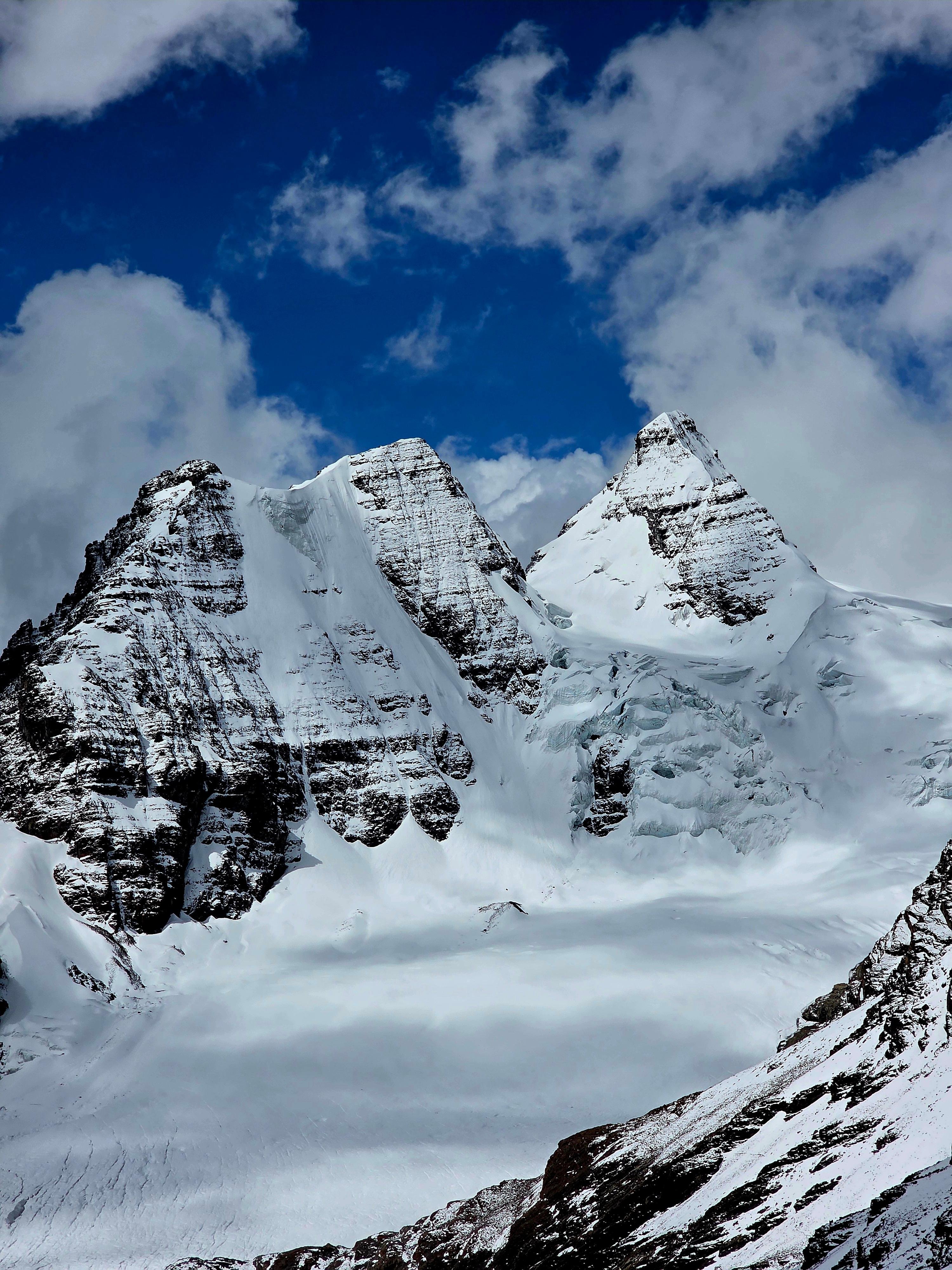
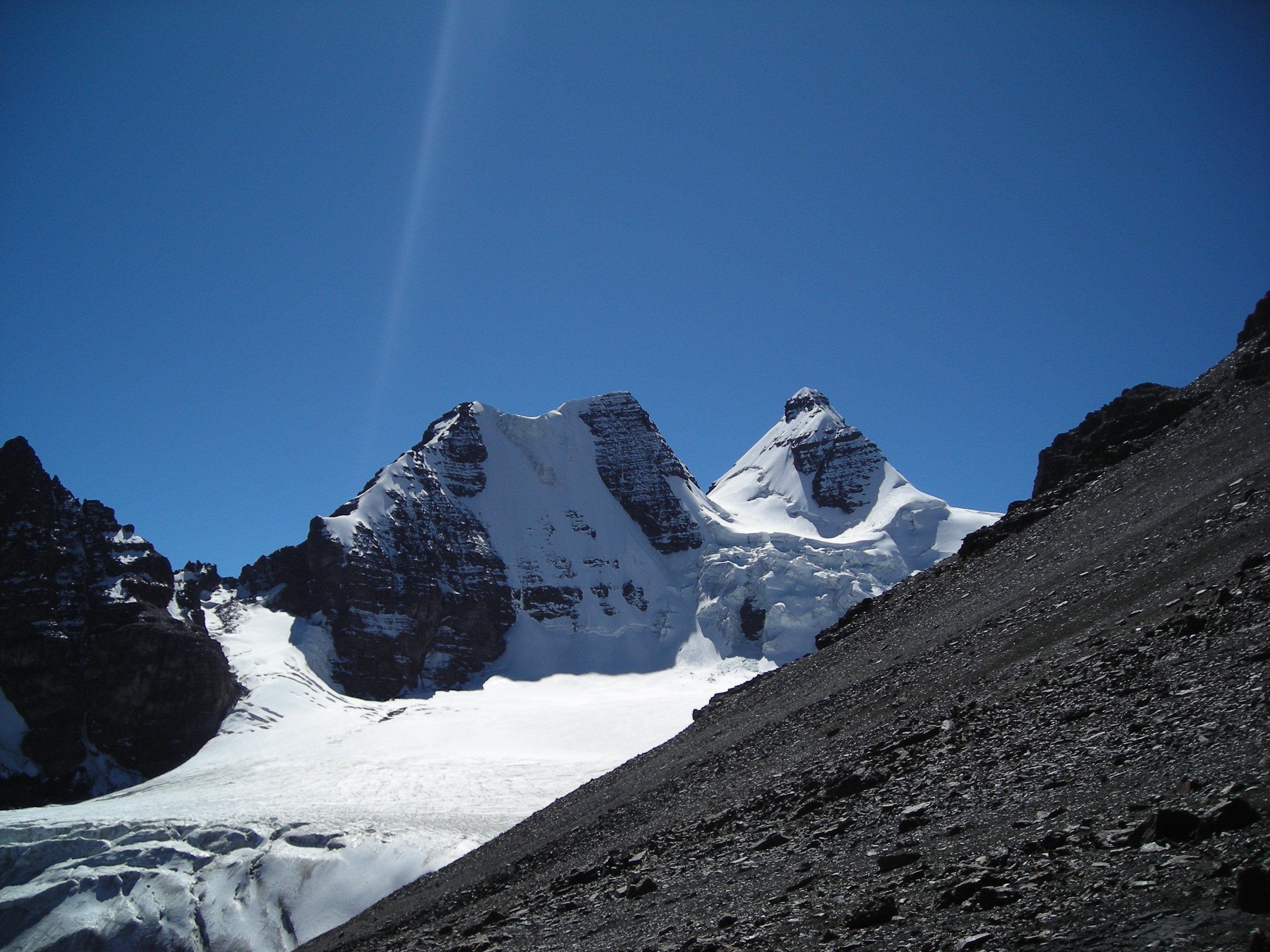
A stunning group of 13 peaks, with the central summit often described as resembling a condor with outstretched wings. It is the defining feature of the Tuni-Condoriri National Park landscape.
The highest point of the trek, reaching 5,350m, providing panoramic views across the Cordillera Real and toward Lake Titicaca. It is a popular, non-technical summit for altitude training.
They complement each other; travelers seeking a rigorous alpine ascent find the pico austria hike from la paz more rewarding, while those wanting a quick glacier experience prefer Charquini.
| Feature | Top pick Pico Austria | Charquini Mountain |
|---|---|---|
Summit Altitude |
5,350 meters | 5,392 meters |
Technical Difficulty |
Moderate trekking | Moderate with ice scramble |
Scenery Type |
Laguna Chiarkota views | Glacier and turquoise lake |
Physical Demand |
High | Moderate to high |
Typical Group Size |
2–8 people | 2–8 people |
Starting Time |
06:00–08:00 | 06:00–08:00 |
| See tickets → |
Verdict: Choose the pico austria hike from la paz tour for endurance and panoramic cordillera vistas, or select Charquini if your priority is access to a dramatic glacier field. Pico austria hike from la paz tickets provide access to a longer, more structured mountaineering day than the more compact Charquini alternative. Pico austria hike from la paz tours remain the superior choice for those testing their lung capacity against technical Andean terrain.
Choose your ticket, select your date, and reserve in under two minutes. Secure checkout handled by our verified partner.
Instant confirmation by email, with a mobile voucher you can save offline. No printing, no queuing at a collection desk.
Arrive at the entrance, show your voucher on your phone, and walk in. Most tickets include priority or skip-the-line access.
Practical details for your visit straight from our verified partners — hours, access, rules, and how to get there.
Wear moisture-wicking layers, a high-quality windproof jacket, and sturdy, broken-in hiking boots. A warm hat and gloves are essential even on sunny days due to high-altitude cold.
Carry a 30L daypack for essentials. There is no formal security check, but ensure your gear is ready for rugged mountain terrain.
Bring extra batteries as cold weather drains power quickly. Capture the peaks of the Cordillera Real and the glacial lakes.
The trek is not accessible to wheelchairs or those with limited mobility. High altitude requires good cardiovascular health and acclimatization.
Not recommended for small children due to extreme altitude and strenuous terrain. Older, fit teenagers with mountain experience may enjoy the hike.
Carry at least 2 liters of water and high-energy snacks. There are no facilities to resupply, so bring all food for the day.
Best time to go, insider tips, nearby landmarks, and the cancellation fine print — flip through to skim what matters to you.
Flexible, no hidden fees.
For a full refund, cancel at least 24 hours before the scheduled departure time. Entrance fees are non-refundable conservation fees collected on site.
Pico Austria rises to 5,320 metres in the Tuni-Condoriri massif, a granite and ice wall thirty kilometres north of La Paz that holds the highest concentration of accessible alpine peaks in the Cordillera Real. The mountain takes its name from the Austrian expedition that first charted the cluster in 1928, though Aymara shepherds had traversed the lower cirques for centuries, guiding llama trains between the Altiplano and the Yungas cloud forests. The summit itself is a knife-edge of metamorphic rock and permanent névé, flanked to the west by the larger Pequeño Alpamayo and to the east by the turquoise mirror of Laguna Chiar Khota, a glacial tarn that sits at 4,670 metres and freezes solid between May and August. The Pico Austria hike from La Paz became a recognised high-altitude training route in the 1990s, when Bolivian climbers used the peak as acclimatisation before attempts on Huayna Potosí and Illimani. The approach follows a dirt track from the village of Tuni, itself reachable by four-wheel-drive in two hours from the El Alto plateau, and ascends through a series of moraine ridges deposited during the Little Ice Age. The treeline vanishes by 4,200 metres, replaced by cushion plants and the occasional viscacha darting between boulders. Snow cover on the final three hundred metres varies seasonally; crampons are often necessary between June and October, while the dry months of May and November offer mixed rock and scree. Condoriri, the condor-shaped massif that anchors the range, dominates the western skyline throughout the climb. The name refers to the bird's outstretched wings, visible in the twin ridges that frame the main peak. Local guides from the Tuni community now manage most trekking permits and coordinate rescue logistics with the Bolivian Mountain Guides Association, a shift that formalised access after a 2003 agreement with the national park authority. The conservation fee of twenty bolivianos supports trail maintenance and waste removal, a visible improvement since the mid-2010s when discarded oxygen canisters and food wrappers littered the upper camps. The summit cairn, rebuilt annually after winter storms, holds a weathered logbook where climbers record their ascent times and conditions, a practice continuous since 1962.
"The treeline vanishes by 4,200 metres, replaced by cushion plants and the occasional viscacha darting between boulders."
A step-by-step walkthrough of the visit — what you'll see, how long each stage takes, and the details that matter.
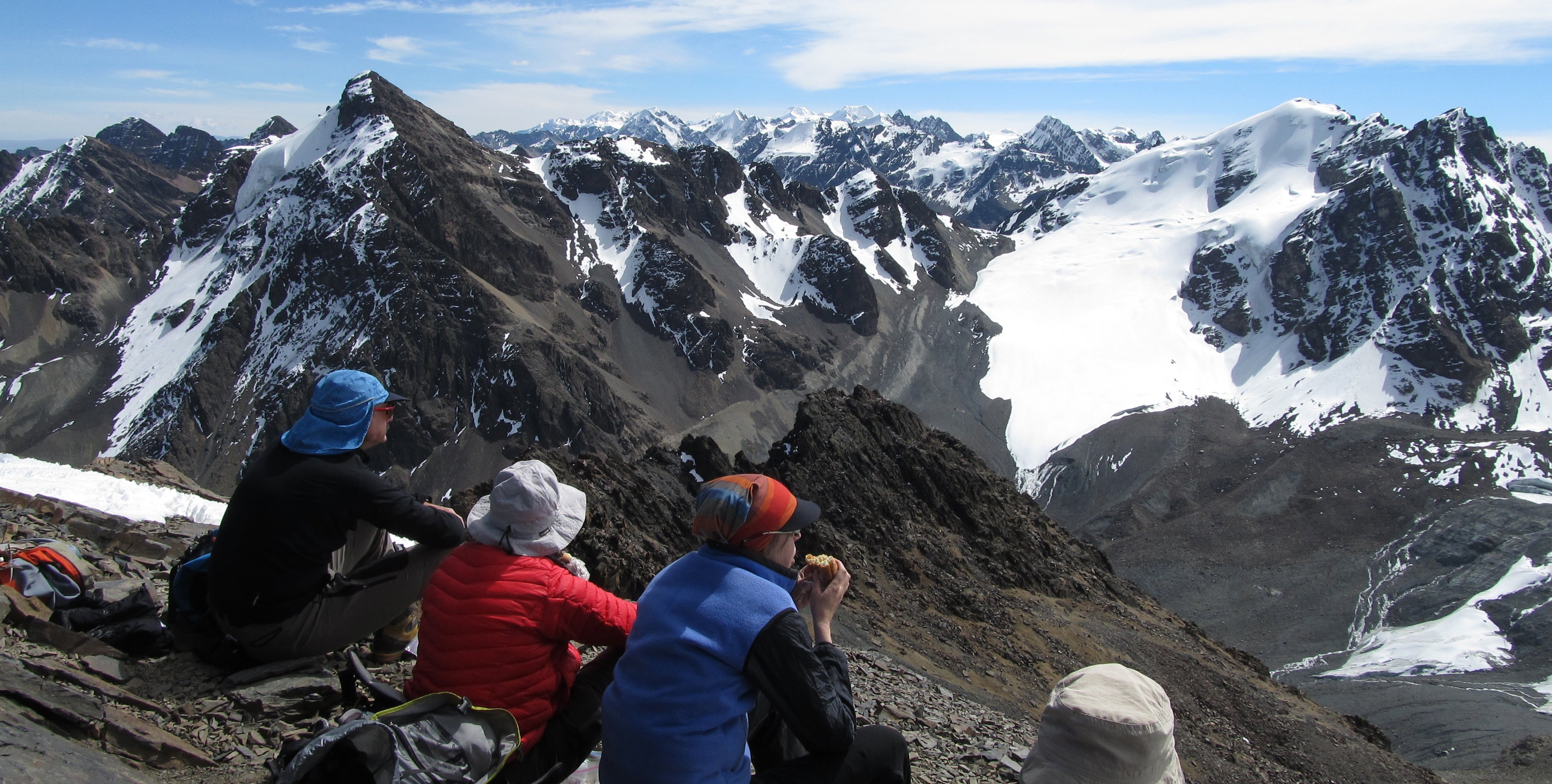
You leave La Paz before dawn, the city's amber grid shrinking as the vehicle climbs toward the El Alto plateau and turns north onto a gravel track that winds past adobe farmsteads and grazing alpacas. Two hours later you reach Tuni, a cluster of stone corrals at 4,150 metres, where your guide collects the park fee and distributes trekking poles. The first hour follows a jeep trail along the western shore of Laguna Tuni, the water slate-grey under morning cloud, before the path steepens into a series of switchbacks over loose talus. By mid-morning you cross the 4,800-metre mark, the air thin enough that conversation drops to single sentences between breaths. The trail levels briefly at a saddle where Laguna Chiar Khota appears below, its surface a milky turquoise fed by meltwater from the Ventanani Glacier. From here the route turns west, scrambling over a rib of dark schist that juts from the ridgeline like a ship's prow. The final push to the summit is a steep scree slope interspersed with fixed rope sections, your boots sliding backward with each step until you plant a pole and lock your weight forward. The summit is a narrow platform barely wide enough for four people, the cairn wrapped in faded prayer flags that snap in the wind. To the west, Pequeño Alpamayo's pyramidal face catches the noon sun, while the distant white dome of Illimani marks the southern horizon. You sign the logbook, eat a bar of chocolate, and begin the descent before the afternoon clouds roll in.
The park is open 00:00–23:59 daily, though we recommend early starts.
Yes, the entrance fee is 20 BOB per person, collected on site at Tuni-Condoriri National Park.
You should arrive between 06:00–08:00 to avoid afternoon storms and clouds.
It is generally not recommended for families with young children due to the high-altitude difficulty.
Photography is encouraged throughout the pico austria hike from la paz as it offers views of the Cordillera Real.
Yes, you must bring all your own food and water for the full day as there are no shops on the trail.
Pack sun protection, a windproof jacket, sturdy boots, and your camera for the pico austria hike from la paz.
The hike is considered hard due to the 5,300m+ altitude, despite the path being non-technical.
Cancellations for pico austria hike from la paz tours are subject to your operator's specific terms, usually requiring 24-hour notice.