English| EUR
Suggested for you
More currencies
Choose a language
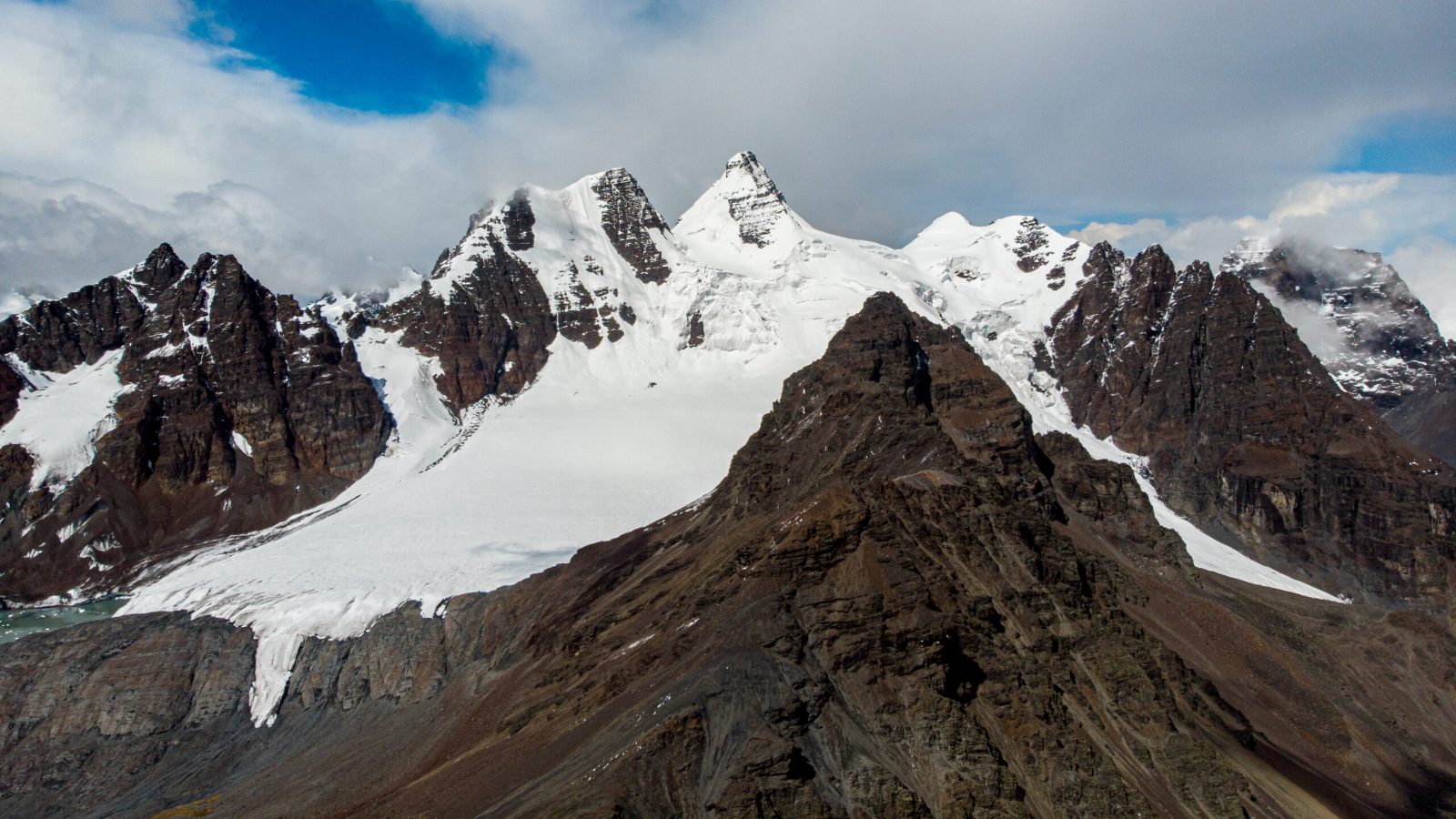
Pico Austria rises as the northern sentinel of the Condoriri massif, a 5,150-meter peak that serves as both acclimatization objective and standalone alpine challenge. The route crosses glacier terrain and demands early starts, crampons, and careful navigation through the Cordillera Real's notoriously variable weather windows.
Quick answer
Pico austria trekking begins from Laguna Chiar Khota base camp at 4,680 meters and follows a glaciated ridge to the summit at 5,150 meters, typically requiring 5-7 hours round trip. The route involves moderate glacier travel with sections of 40-45 degree snow slopes near the summit. A 20 BOB conservation fee applies per person, and departure from base camp between 3:00 and 4:00 AM is standard to avoid afternoon whiteout conditions common above 5,000 meters in the Cordillera Real.
The summit register on Pico Austria holds fewer than three hundred entries per year, despite the peak standing less than four kilometers from one of Bolivia's most accessible trailheads. The discrepancy reflects altitude, not difficulty—at 5,150 meters, this is a mountain where acclimatization determines success more decisively than technical skill, and where the three-hour drive from La Paz delivers climbers straight into rarefied air with little physiological cushion. The standard pico austria trekking route departs from Laguna Chiar Khota, a turquoise glacial lake that serves as base camp for the entire Condoriri group. Most parties establish camp at 4,680 meters, sleep poorly, and depart in darkness between 3:00 and 4:00 AM to cross the glacier before the sun softens the snow bridges spanning shallow crevasses on the lower apron. The route angles northeast from the lake, ascending talus for thirty minutes before transitioning to neve and following the glacier's left margin toward the col between Pico Austria and the smaller satellite peak to its north. Fixed tracks are rare; route-finding falls to the party, and in low visibility the correct line is easy to lose against the uniform white of the upper snowfield. The gradient steepens above 5,000 meters, topping out at 40-45 degrees for the final hundred vertical meters to the summit ridge. Crampons and a single ice axe suffice in normal conditions; a rope is prudent for parties unfamiliar with glacier travel, though most guided groups move unroped given the limited objective hazard. Condoriri base camp sits within Parque Nacional Tuni-Condoriri, and a 20 BOB conservation fee is collected at the trailhead. No formal permitting process exists, but rangers patrol intermittently and payment is effectively mandatory. The road to the trailhead, accessible only by high-clearance 4WD, leaves the main La Paz-Copacabana highway near Tuni and climbs through a roadless zone where the term "road" generously describes a boulder field with tire ruts. Most trekkers arrange transport from La Paz—agencies quote 400-600 BOB for a return shuttle, and the three-hour drive eliminates any question of attempting the approach in a standard sedan. Weather windows in the Cordillera Real compress into a predictable but narrow pattern. May through September offers the driest months, though "dry" at this latitude means afternoon cloud buildup rather than all-day precipitation. Storms arrive from the east, pushed over the Amazon basin by prevailing winds, and the massif generates its own localized weather as moist air meets the glaciated crest. Summit attempts that begin after 7:00 AM rarely succeed—cloud cover obscures the route, temperature inversions destabilize the snowpack, and descent through whiteout becomes a navigation problem that no amount of cairns can solve. The Condoriri trekking window is not a season; it is a four-hour block each morning when the air remains cold, the visibility holds, and the altitude permits movement upward at a sustainable pace.
“The summit register on Pico Austria holds fewer than three hundred entries per year, despite the peak standing less than four kilometers from one of Bolivia's most accessible trailheads.”
The optimal time to visit Pico Austria is during the dry season, specifically between May and September, to ensure stable mountain conditions. A daily arrival window of 06:00–09:00 is essential to account for the long drive and to avoid persistent afternoon cloud cover at high altitude.
Dry, clear skies, 0°C to 12°C
This period offers the most stable weather for trekking the Cordillera Real. High-altitude visibility is at its peak during these months.
Frequent precipitation and snow, -5°C to 10°C
Increased cloud cover and precipitation make this the wet season. Trails may become slippery or require extra caution.
—
Early arrival within the 06:00–09:00 window is required to avoid afternoon clouds. Mid-week days experience fewer trekkers than weekends.
Verdict: The best slot for this trek is any weekday between May and September, utilizing the 06:00–09:00 arrival window.
Pico Austria is located within the Cordillera Real in the Parque Nacional Tuni-Condoriri. Access requires traveling from La Paz toward the Tuni reservoir via the road to Huarina.
Private 4x4 vehicle from La Paz to Tuni village
Private hire transport from La Paz to Tuni trailhead
A 4x4 vehicle is necessary due to the rugged, unpaved terrain leading to the trailhead at Parque Nacional Tuni-Condoriri. Ensure your transport is arranged in advance, as public transit does not reach the park entrance.
The Pico Austria summit route follows a steady approach from Laguna Chiar Khota to the glacier, then a technical snow ascent to the peak. The round trip typically requires 6–8 hours from the trailhead.
From the lake, identify the trail heading southwest toward the visible Condoriri massif—many hikers mistakenly follow the more obvious path north toward Pequeño Alpamayo.
Trek across the moraine field for approximately 90 minutes, keeping the lake behind you; the terrain is loose rock, so ankle support is critical.
Climb the steep scree directly below the glacier snout, gaining roughly 200 meters in elevation—many parties rope up here even before reaching ice.
Navigate the crevasse at the glacier base, then ascend the 45–50 degree snow slope using crampons and ice axe; fixed anchors are rare, so bring your own protection.
Follow the exposed ridgeline east for the final 50 meters to the summit cross—the corniced edge requires careful foot placement and many skip this section in high wind.
Reverse your path, downclimbing the glacier face while the snow is still firm; afternoon sun softens the surface and increases rockfall risk on the scree.
The Parque Nacional Tuni-Condoriri remains accessible throughout the week. While the area is open daily, treks must be conducted during daylight hours for safety.
High-altitude trekking demands specialized gear and careful preparation to handle extreme cold, intense sun, and rapidly changing weather above 5,000 meters.
Everything you need to know about pico austria trekking
Pico Austria trekking is often considered an entry-level mountaineering experience in the region, though it demands a good baseline of physical fitness and acclimatization to high altitude. The path involves steady inclines and uneven terrain typical of Andean high-altitude routes.
The best arrival window is 06:00–09:00, as an early start is required for the long drive and to avoid afternoon cloud cover at high altitude. Departing early ensures you complete the ascent and return safely before the weather shifts.
Yes, visitors must pay a conservation fee of 20 BOB per person to access the Parque Nacional Tuni-Condoriri. This fee supports the maintenance of the protected area and its facilities.
The summit reaches approximately 5,350 meters above sea level. This significant elevation requires careful pace management and proper hydration to mitigate altitude sickness during your high-altitude climb.
The park is accessible every day from 00:00–23:59, though trekking activities should be planned according to daylight and weather conditions. Please note that the official arrival window remains the most practical recommendation for safety.
While experienced youth might manage parts of the route, the extreme altitude makes this trip challenging for most children. We recommend evaluating individual fitness levels and prior acclimatization before attempting this steep mountain ascent.
When preparing for mountain climbing in Bolivia, prioritize sturdy hiking boots, layers for changing temperatures, and sun protection. High-altitude gear is essential to remain comfortable throughout your Cordillera Real expedition.