24 hr
Condoriri Mountain & Austria Peak High-Altitude Trek
Summit Austria Peak at 5,350m on this challenging full-day Andean trek from La Paz with lunch included
Reserve
Hand-picked by our editors — only the best 5 alpine experiences from 12 reviewed.
Verified partners for every tour, free cancellation where available, and instant confirmation on every booking.
24 hr
Summit Austria Peak at 5,350m on this challenging full-day Andean trek from La Paz with lunch included
Reserve
8 hr
Summit the altiplano at 5,024m and witness a turquoise glacial lake cradled by Andean giants.
Reserve
11 hr 30 min
Full-day guided mountain hike through Bolivia's highland wilderness to a pristine glacier lagoon at 5,050m
ReservePrices from verified partners. Availability updates in real time at checkout. Free cancellation policies apply where shown.
The landmarks, rooms, and views travelers on this tour remember — all visible on a single visit.
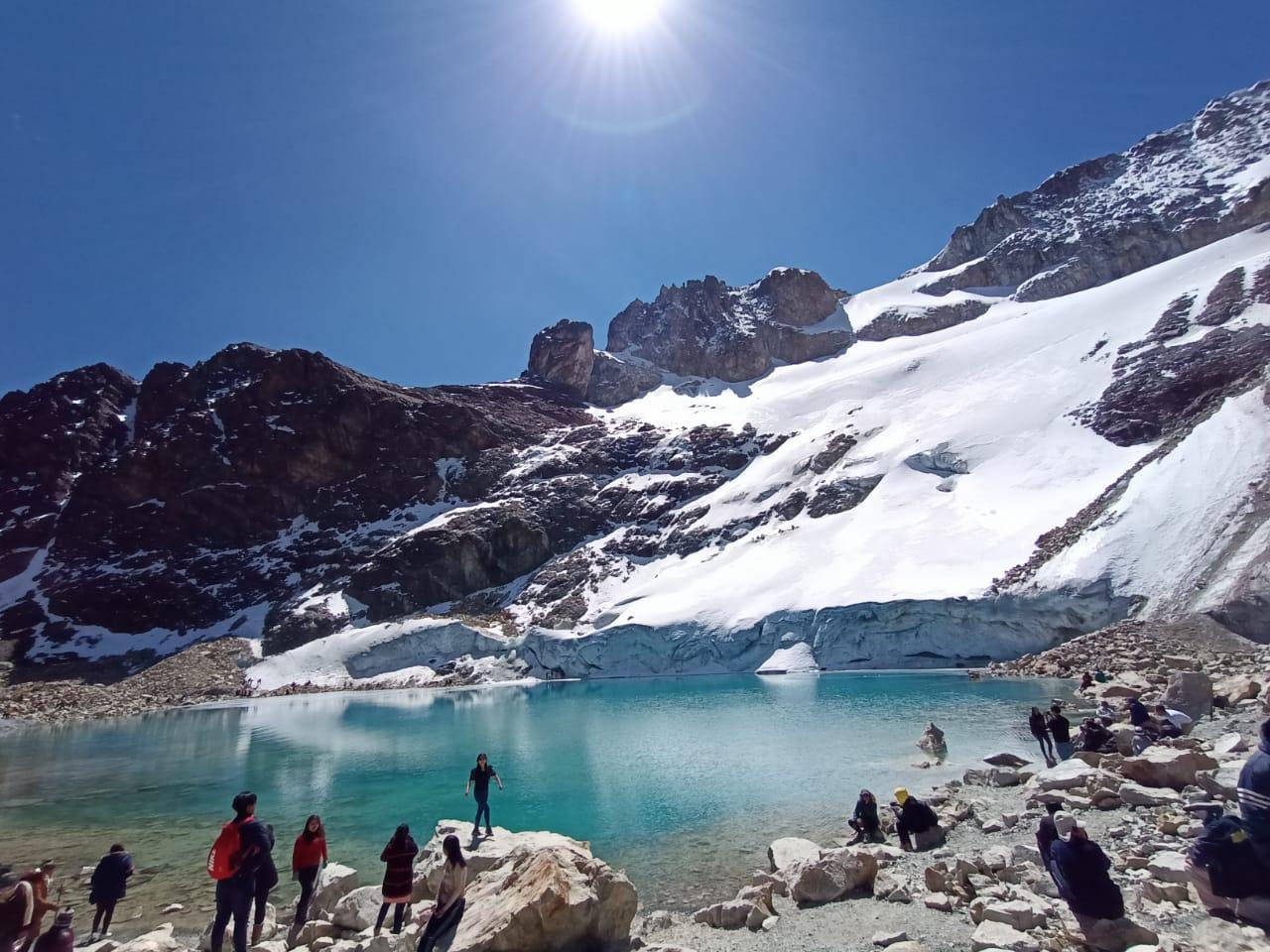
A high-altitude glacial lake reflecting the surrounding peaks at 4,600 meters.
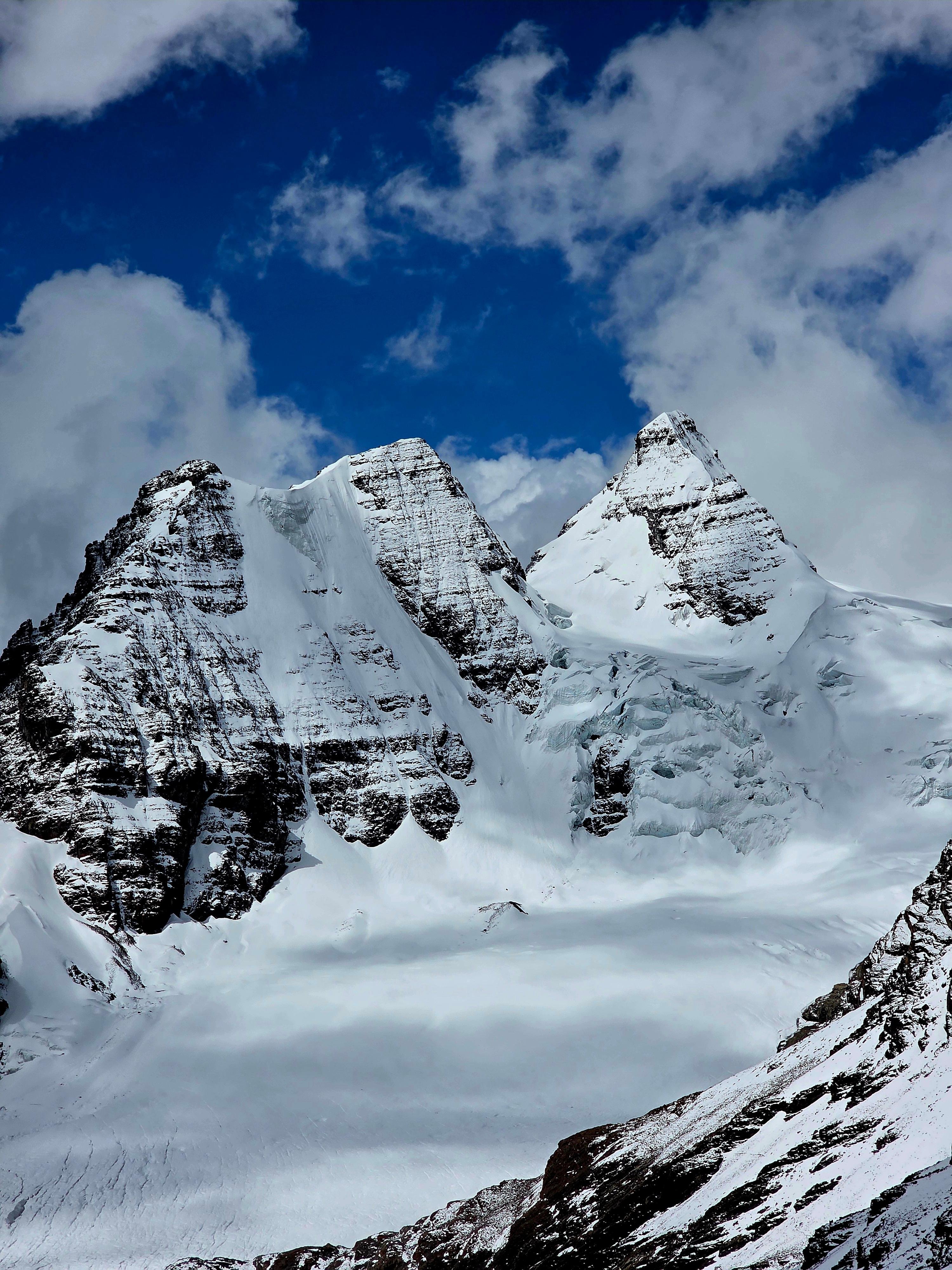
The central massif representing the head of a condor, towering over the landscape.
The final destination of the pico austria hike tour offering views of the Cordillera Real.
The main staging ground where trekkers prepare for the ascent to Pico Austria.
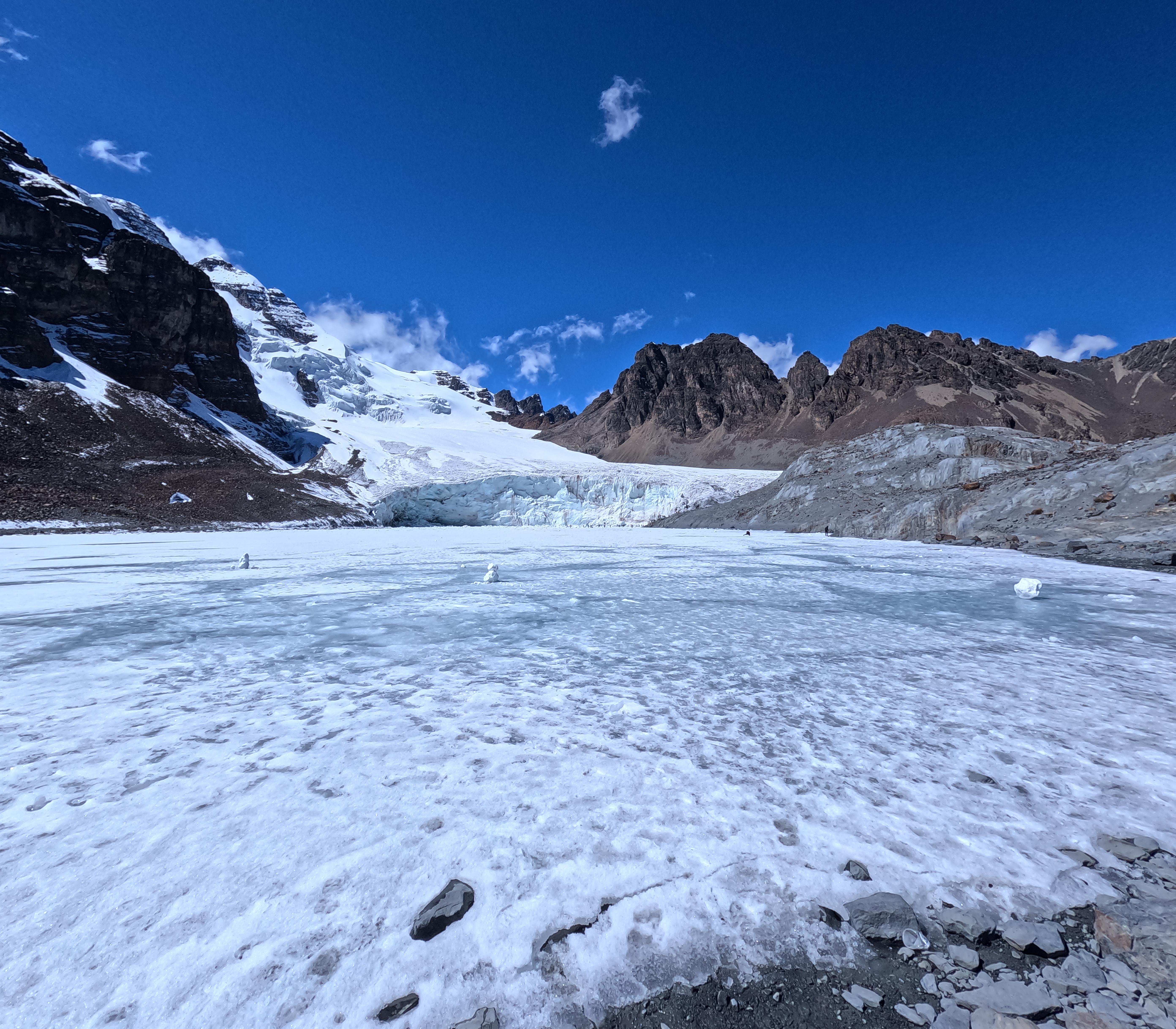
Water sources flowing from the ice, requiring careful navigation.
They complement each other; most visitors who do both call the Pico Austria hike tour the more rewarding high-altitude expedition, while Charquini offers a faster, visually striking alternative.
| Feature | Top pick Pico Austria | Charquini Mountain |
|---|---|---|
Physical Difficulty |
High (strenuous) | Moderate (steady climb) |
Max Altitude |
5,320 meters | 5,050 meters |
Primary Scenery |
Glacial peaks and lakes | Emerald lagoon and glacier |
Time Required |
6–8 hours | 3–5 hours |
Technical Requirements |
Basic trekking experience | No technical skills required |
Entrance fee |
20 BOB (per person) | 20 BOB (per person) |
| See tickets → |
Verdict: Select the pico austria hike tour tours if you seek a full-day summit challenge, or choose the Emerald Lagoon trek if your pico austria hike tour tour schedule requires a shorter duration, though you will still need to secure pico austria hike tour tickets for park entry.
Choose your ticket, select your date, and reserve in under two minutes. Secure checkout handled by our verified partner.
Instant confirmation by email, with a mobile voucher you can save offline. No printing, no queuing at a collection desk.
Arrive at the entrance, show your voucher on your phone, and walk in. Most tickets include priority or skip-the-line access.
Practical details for your visit straight from our verified partners — hours, access, rules, and how to get there.
Central La Paz
Pick-up for guided trek
Private transport is the only reliable way to reach the trailhead for a pico austria hike tour.
Wear thermal layers and moisture-wicking materials to manage fluctuating mountain temperatures during your pico austria hike tour. Sturdy, broken-in hiking boots with ankle support are essential for the rocky terrain.
Bring a lightweight daypack for your essentials while participating in a pico austria hike tour. Keep valuables secure and avoid carrying unnecessary weight to aid breathing at high elevations.
The Condoriri landscapes offer vast opportunities for nature photography. Please respect the environment and do not leave any equipment or trash behind during your pico austria hike tour.
This trail involves steep elevation gain and rugged paths, making it unsuitable for individuals with mobility challenges. Access to the summit of the pico austria hike tour requires significant physical conditioning.
Cellular reception is extremely limited or non-existent in the remote Cordillera Real range. Download offline maps before starting your pico austria hike tour.
The pico austria hike tour is recommended for experienced teenage hikers and adults with prior high-altitude trekking experience. Younger children may struggle with the thin air and sustained incline.
Pack at least three liters of water and high-energy snacks such as nuts, dried fruits, or chocolate. There are no facilities to purchase supplies once you begin the pico austria hike tour.
Pets are prohibited as this is a protected area managed by local rangers. Respecting wildlife habitats is a requirement for all who undertake a pico austria hike tour.
The 20 BOB conservation fee is paid directly to local rangers at the trailhead. Cash in small denominations is necessary for this mandatory payment during your pico austria hike tour.
Best time to go, insider tips, nearby landmarks, and the cancellation fine print — flip through to skim what matters to you.
How crowds, weather, and events shift across the year.
This is the dry season, offering the clearest skies for a pico austria hike tour. Temperatures are cold, but stable weather is critical for safe summit access.
Small details that turn a good visit into a great one.
Spend at least 3 days in La Paz before your pico austria hike tour to reduce altitude sickness risk.
Non-bookable sights within a short walk — free to visit, easy to pair.
A glacial lake serving as the base camp for climbing the peaks.
Flexible, no hidden fees.
Full refunds are available for cancellations made at least 48 hours before the scheduled departure. The 20 BOB conservation fee is non-refundable as it is collected by rangers upon entry.
Hand-picked options within walking distance — pick a district for vibe, or a specific hotel for convenience.
Varied options located in the central district.
Pico Austria rises to 5,320 metres in the Condoriri massif, its summit ridge serrated by ice flutes and wind-sculpted névé that reforms every austral winter. The peak was named not for the European nation but for an early Bolivian climber whose surname echoed the distant Alps, a coincidence that now threads through expedition logs and topographic surveys across the Cordillera Real. First ascended in the mid-twentieth century by a German-Bolivian party, the mountain remains less trafficked than neighbouring Pequeño Alpamayo yet demands equal respect: crevasse fields open without warning beneath its southeastern face, and afternoon electrical storms arrive with mechanical punctuality between December and March. The standard route departs from Laguna Chiar Khota at 4,600 metres, crossing a glacial outwash plain where meltwater braids through terminal moraine left by the Little Ice Age. Climbers gain the col between Austria and Tarija peaks via a sustained scree slope, then traverse leftward onto the glacier proper. Fixed ropes installed by local guiding cooperatives mark the steepest sections, though seasonal snowfall buries the anchors by June. The final ridge—a knife-edge of consolidated firn—requires front-pointing and a steady nerve; exposure on both flanks exceeds 300 metres. Summit views encompass Illimani's triple crown to the south, Huayna Potosí's broad dome to the north, and the rust-coloured altiplano stretching toward Lake Titicaca. Condoriri National Park, established in 1992 to protect the range's seventeen glaciated peaks, collects a 20-boliviano conservation fee at the trailhead. Rangers verify permits and brief parties on crevasse-rescue protocol, a response to three fatalities in 2018 when unseasoned trekkers attempted the circuit without acclimatisation. The park's name derives from the Aymara word for condor; the birds still roost on the cliffs above Laguna Chiar Khota, their three-metre wingspans unmistakable against the blue-black sky. A pico austria hike tour typically spans two days, with one night at the Refugio Austria—a stone hut at 4,750 metres operated by a family from the nearby village of Tuni. The refuge stocks gas canisters and instant noodles but no fresh water; all drinking supply must be melted from snow or carried from the lake. Guided ascents of Austria Peak depart La Paz between 4:00 and 5:00 a.m., reaching the trailhead by 7:30 after a jarring drive through the Zongo Valley. Most operators require proof of prior acclimatisation—a minimum three nights above 3,600 metres—and rental crampons are inspected at the refuge before the summit push. The mountain's technical grade (AD in the French system, PD+ in Swiss) understates its physiological difficulty; even fit climbers report splitting headaches and nausea above 5,000 metres, where atmospheric pressure drops to half that at sea level.
"The final ridge—a knife-edge of consolidated firn—requires front-pointing and a steady nerve; exposure on both flanks exceeds 300 metres."
A step-by-step walkthrough of the visit — what you'll see, how long each stage takes, and the details that matter.
You leave La Paz in darkness, the city's lights receding as the van climbs past eucalyptus groves and into the Zongo Valley. By 7:30 you step onto the talus below Laguna Chiar Khota, the lake a mirror of cobalt framed by the Condoriri massif. Your guide distributes crampons and checks harness buckles while you shoulder a pack containing three litres of water, a down jacket, and a headlamp for the descent. The trail begins as a gentle traverse across sedge meadows, then steepens into a scree gully where every step slides backward half a pace. At the col you rope up. The glacier starts benignly—a smooth tongue of ice—but within twenty minutes you're skirting a crevasse wide enough to swallow a car. Fixed lines appear on the steeper pitches; you clip in, kick your front points into the slope, and haul upward using the prussik knot your guide demonstrated at breakfast. The air thins. Your breath comes in gasps. At 5,200 metres you pause to photograph Huayna Potosí, its summit pyramid glowing pink in the 10:00 a.m. light. The final ridge is narrow—boot-width—and you move one deliberate step at a time, ice axe planted, until the ground levels and you're standing on the summit at 5,320 metres. Illimani dominates the southern horizon. A condor drifts past, close enough that you hear the wind hiss through its primaries. You stay ten minutes, then begin the descent, which takes three hours of careful downclimbing and ends with your boots back on dirt at Laguna Chiar Khota, legs shaking, face sunburned, entirely satisfied.
The trail is accessible 00:00–23:59 daily, though we recommend a 06:00–08:00 start for safety.
Yes, there is a 20 BOB conservation fee collected by rangers at the site.
The dry season from May to September is optimal for this Andean landmarks tour.
It is physically demanding and best suited for experienced adult trekkers rather than families.
Please check our live availability for your preferred pico austria hike tour date.
The starting point is Condoriri National Park, located in the La Paz Department.
There are no storage facilities at the remote trail, so keep your items with you.
Your tour operator will provide options for rescheduling your pico austria hike tour based on safety.
No, pets are not allowed in the protected area of the Condoriri Mountain range.
No, you must carry all necessary water and food for the entire duration of your hike.